
First impressions happen faster than we like to admit.
Before a conversation starts, before a handshake, before a single word is spoken, people are already forming an opinion. It’s instinctive. It’s human. And in business, it can quietly shape the direction of everything that follows.
We often think about how we present ourselves in those moments. What we say, how we say it, how we show up. But what’s easy to overlook is how much of that first impression is happening before we even enter the conversation.
Because in many cases, your print has already arrived ahead of you.
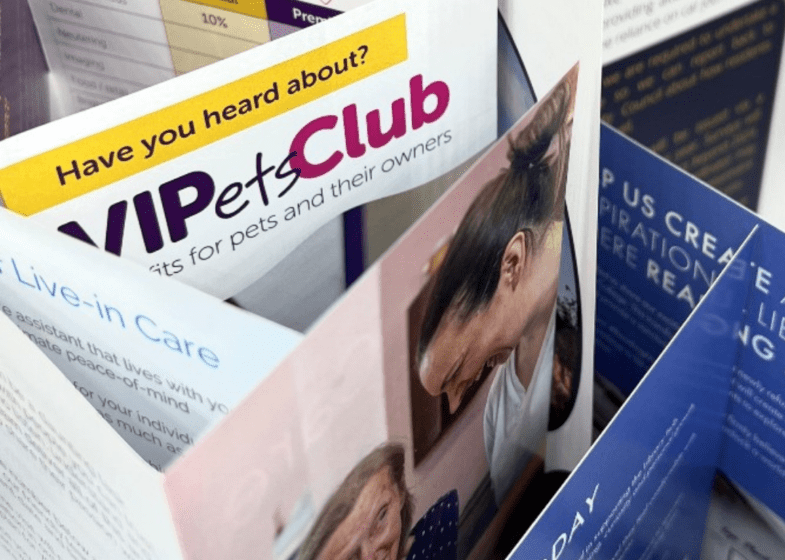
A business card handed over at a networking event. A brochure picked up at a stand. A banner spotted across a busy room. A leaflet received through the post. These aren’t just pieces of paper; they are silent introductions. They set expectations. They frame perception. They answer questions before they’re asked.
And whether we realise it or not, people use these cues to decide how seriously to take you.
Tangible Print Where It Matters
There’s something uniquely powerful about print in this moment. Unlike digital content, which is often skimmed, scrolled or forgotten, print creates a pause. It invites attention. It gives the person holding it a chance to engage in a more considered way. There’s a physical presence to it. A weight, a texture, a permanence.
That tactile experience plays a bigger role than most people think.
A well-produced business card doesn’t just share contact details, it communicates confidence. A brochure with a clean layout and thoughtful structure doesn’t just inform, it reassures. A neatly printed price list doesn’t just display information; it builds trust through clarity.
These are small signals, but they carry meaning.
On the other hand, print that feels rushed, outdated or inconsistent can quietly undermine everything else. A worn-out banner, a leaflet that no longer reflects your services, or business cards with outdated details can create friction. Not enough to stop a conversation entirely, but enough to plant doubt.
And doubt, even in small amounts, changes how people engage.
What’s interesting is that most businesses don’t notice when this happens. Not because they don’t care, but because print tends to sit in the background. It’s something that gets produced, used and then left as it is. Over time, it slowly falls out of sync with the business itself.
Your business evolves. Your services grow. Your confidence builds. But your print stays the same.
That’s where the disconnect begins.
The good news is that closing that gap doesn’t require a complete reinvention. Often, it’s about taking a step back and asking a simple question:
“If someone saw this for the first time today, what would they think?”
That question alone can change how you approach your print.
Sometimes the answer leads to small but meaningful updates. A refreshed set of business cards with a better finish. A brochure that tells your story more clearly. A roller banner that communicates your message in seconds, not minutes. Even something as simple as a well-designed leaflet can make your business feel more considered and more complete.
And when these elements work together, the effect multiplies.
Consistency across your materials creates familiarity. Familiarity builds trust. When your colours, tone and style feel aligned across your brochures, signage, stationery and promotional items, it gives the impression of a business that knows exactly who it is.
That confidence is felt, even if it’s not consciously noticed.
It’s also worth thinking about the different environments where these impressions are formed. In a busy event space, your print needs to work quickly. A roller banner or display needs to catch attention at a glance. At a meeting, your business card or brochure has more time to be explored. In a reception area, your materials might sit quietly, waiting to be picked up.
Each of these moments asks something slightly different of your print.
Some pieces need to be bold and immediate. Others need to be clear and informative. Some need to feel premium and considered. Understanding where and how your print will be used is just as important as what it looks like.
Even the most practical items play a role here. Branded notepads neatly presented folders or simple information packs often become part of someone’s working day. They’re used without much thought, but that’s exactly what makes them effective. Your brand becomes familiar, present in small, consistent ways.
And that familiarity matters.
Because in business, people rarely make decisions based on one interaction. It’s usually the result of multiple touchpoints, building confidence over time. Print is often one of those touchpoints, quietly reinforcing your presence in the background.
At RS Print, we see this from both sides. We see how a well-thought-out piece of print can change how a business is perceived. We also see how easy it is for print to be overlooked until something doesn’t quite feel right.
That’s why our role is often more than just producing the final piece. It’s about helping you think through what you need, how it will be used and how it represents your business at that all-important first glance.
Because when your print is right, it doesn’t just support your business, it strengthens it.
It gives you confidence when you hand something over. It helps your message land more clearly. It makes your brand feel established, even in a first interaction.
And perhaps most importantly, it removes friction. It allows people to focus on what you do, rather than questioning how you present it.
First impressions may be quick, but their impact lasts.
And when your print is working for you, it ensures that impact is a positive one.
Becky
Print on a first name basis.